Ebike Battery 52V Explained: A UK Buyer's Guide
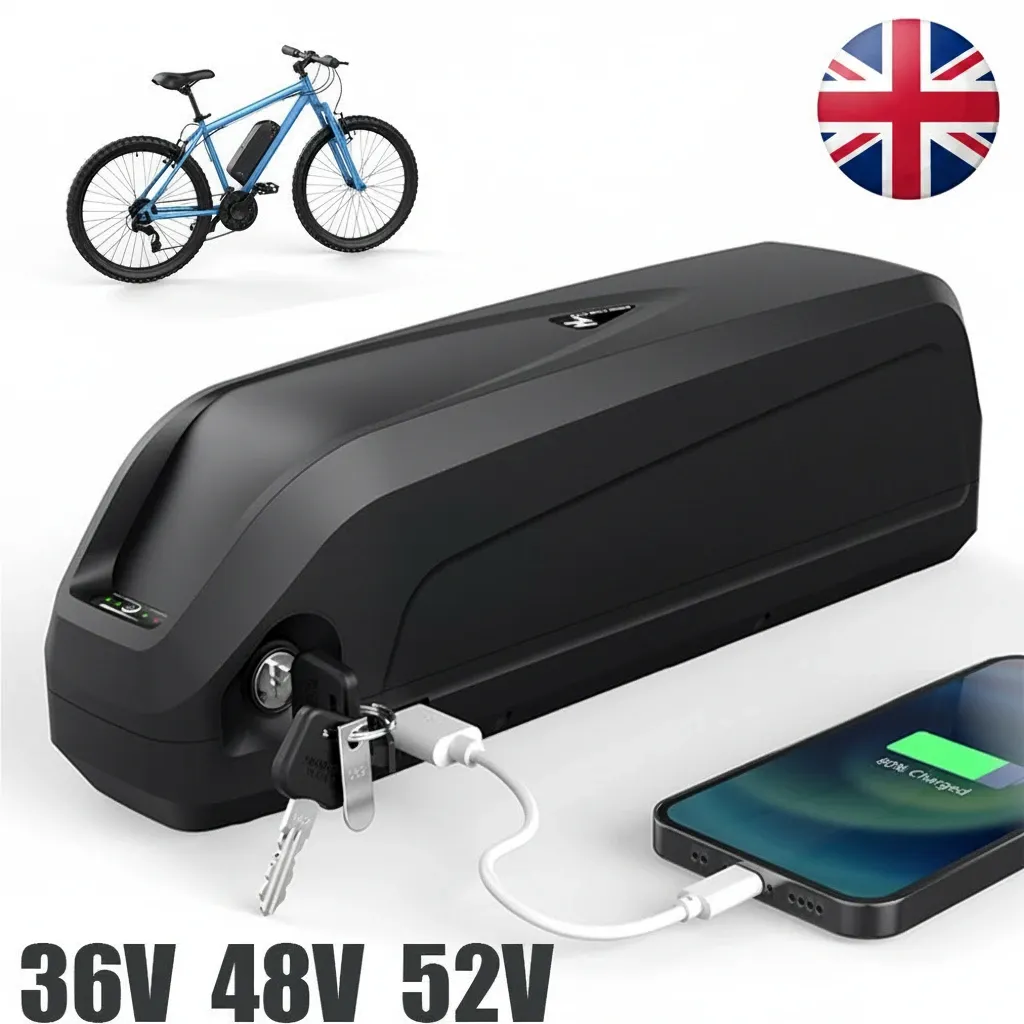
An ebike battery 52v is a 52-volt lithium-ion battery pack used to give a compatible e-bike stronger acceleration, better hill-climbing and, in some cases, improved efficiency under load. For UK riders, it can be an excellent option if your bike already supports 52V operation and you want more punch than a typical 48V setup without changing to a completely different class of vehicle.
TL;DR: A 52V e-bike battery can make a compatible bike feel quicker and more capable on hills, especially for commuters, heavier riders and cargo use. However, voltage alone does not determine range or legality: you also need to check watt-hours, controller compatibility, charger specification and whether the full bike still meets UK EAPC rules.
At Eifduhp Power, we focus on battery systems built around real-world use: dependable lithium-ion cells, safety-first battery management systems and straightforward installation. Based on our testing and customer feedback from riders across Britain, the best battery choice is rarely the highest voltage on paper; instead, it is the one that matches your motor, controller, route profile and charging habits.
This guide explains what a 52V pack actually does, who it suits, how it compares with 48V systems, what to check before buying in the UK, and where value really lies in 2026. If you’re still comparing core battery types and formats, our Ultimate Guide to Electric Bike Batteries 48V in the UK gives useful background before you choose your next pack.
Key Takeaways
- A 52V e-bike battery typically delivers stronger acceleration and improved hill performance than a 48V pack when paired with a compatible controller and motor.
- Battery capacity matters as much as voltage: a 52V 13Ah pack stores about 676Wh, while a 52V 20Ah pack stores about 1,040Wh.
- For UK buyers, compatibility checks should include connector type, cradle fit, controller voltage tolerance, charger specification and BMS protection.
- Well-built lithium-ion packs with overcharge, overcurrent and temperature protection are safer for commuting in wet, cold British conditions.
- A 52V pack isn’t automatically legal or illegal in itself; UK road legality depends on the complete EAPC setup, including motor output and assistance rules.
What is an ebike battery 52v?
An ebike battery 52v is a lithium-ion battery pack with a nominal voltage of 52 volts. In practical terms, that usually means a pack built from fourteen cells in series, commonly written as 14S. A fully charged 52V battery reaches about 58.8V, while its nominal operating voltage is described as 51.8V or rounded to 52V.
In simple terms, the reason riders choose this voltage is performance. When matched correctly to a suitable controller and motor, a 52V system can feel more responsive off the line, stronger on climbs and less strained when carrying luggage or dealing with stop-start traffic.
However, not every rider needs one. If your journeys are mostly short and flat, a lower-voltage system may already be perfectly adequate. By contrast, if you regularly face hills, headwinds or longer mixed-terrain rides, a 52V battery becomes far more appealing.
Is a 52V e-bike battery better than 48V?
This is one of the most common questions UK buyers ask. The short answer is: a 52V battery can be better for performance, but only if your bike is designed to handle it safely.
Does higher voltage make an e-bike faster or more responsive?
Usually, yes. A higher-voltage battery can help the motor spin more readily at any given current level. As a result, riders often notice brisker pull-away from junctions and stronger assistance on short climbs common in places such as Bristol, Sheffield or Bath.
Does a 52V battery give more range?
Not automatically. Range depends on total stored energy, riding style, terrain, tyre pressure, weather and rider weight. Therefore, the figure that matters most for distance is watt-hours rather than voltage alone:
- 52V × 13Ah = about 676Wh
- 52V × 15Ah = about 780Wh
- 52V × 20Ah = about 1,040Wh
So while two batteries may both be labelled 52V, they can offer very different usable range depending on their amp-hour rating.
Can you swap a 48V e-bike battery for a 52V battery?
Not always. In fact, compatibility is the biggest issue with this upgrade path. Many components designed for standard 48V operation will not safely accept a fully charged input of around 58.8V. Therefore, you must confirm motor controller tolerance, charger compatibility, display limits and connector fit before buying. If you’re still deciding whether staying with forty-eight volts makes more sense for your bike, see our guide to the 48V Battery For Ebike Explained: A UK Buyer’s Guide.
Who should buy an ebike battery 52v in the UK?
A 52V battery tends to suit riders who already know where their current setup feels limited. In our experience at Eifduhp Power, four groups benefit most.
Is it good for commuting?
Yes—especially if your daily ride includes gradients, bridges or exposed roads with headwinds. For suburban-to-city routes of roughly 10 to 25 miles each way, extra voltage can make assistance feel steadier and less laboured.
Is it suitable for heavier riders or cargo bikes?
Often yes. Total system weight has a major effect on real-world performance. Therefore, riders carrying work equipment, shopping or child-seat loads often appreciate the stronger pull from a compatible higher-voltage pack.
h3If your conversion kit uses components rated for higher input voltage and your existing pack is tired or undersized, upgrading to a fresh higher-voltage option can noticeably improve ride feel. Even so, never assume that matching plugs mean safe electrical compatibility.
Is it mainly for enthusiasts?
Not only enthusiasts—but keen riders do often like the sharper response. If you prioritise ride character over bare-minimum assistance and regularly cycle over mixed terrain or private land where appropriate, a well-matched 52V setup can feel more satisfying.
Ready to boost your range with Eifduhp Power?
Upgrade Your Ride — £19.99