48V Ebike Battery Charger Explained: A UK Buyer's Guide
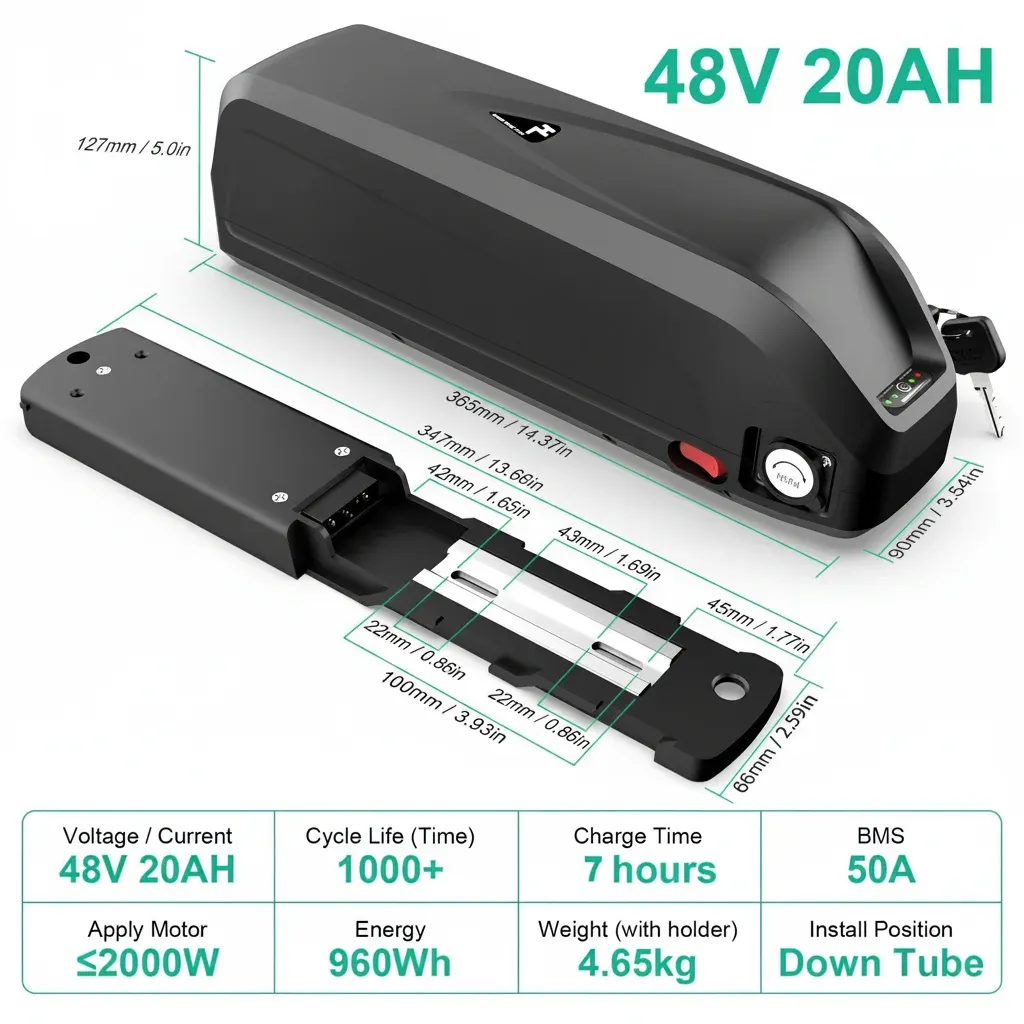
A reliable 48v ebike battery charger is the unsung hero of your daily commute. While much of the focus naturally falls on the motor's torque or the battery's watt-hour capacity, the charger determines how safely, quickly, and efficiently your bike returns to the road. In the UK, where we contend with damp mornings and varying electrical safety standards, choosing the correct charging equipment is not just a matter of convenience—it is a matter of longevity for your investment.
At EIFDUHP, we've spent years testing lithium-ion configurations specifically for the British market. We understand that a 48V system is the "sweet spot" for many UK riders, balancing power with efficiency. However, using the wrong charger can degrade your cells prematurely or, in worst-case scenarios, pose a significant fire risk. This guide breaks down everything you need to know about selecting, using, and maintaining a 48v ebike battery charger in 2026.
Key Takeaways: 48V Charging at a Glance
- Voltage Clarity: A 48v ebike battery charger actually outputs 54.6V at full charge. Always verify the "Output Voltage" on the label.
- Safety First: Ensure your charger carries the UKCA or CE mark and includes Over-Voltage Protection (OVP).
- Amperage Matters: Most UK e-bikes use a 2A charger for longevity, though 4A or 5A "fast chargers" are available for larger capacity packs.
- Connector Compatibility: There is no single UK standard; common types include XLR, DC2.1, and RCA.
- Storage: Never charge a freezing battery. Bring your battery to room temperature before plugging it in during British winters.
The Science of the 48v Ebike Battery Charger
To understand your charger, you must first understand the battery it serves. A "48V" battery pack is actually a nominal rating. Most 48V e-bike batteries consist of 13 lithium-ion cells connected in series (known as 13S). Each cell has a nominal voltage of 3.6V (13 x 3.6 = 46.8V, rounded to 48V) but reaches 4.2V when fully charged.
Therefore, a compatible 48v ebike battery charger must have a maximum output of 54.6V. If you use a charger with a lower output, your battery will never reach 100% capacity. Conversely, using a charger designed for a 52V system (which outputs 58.8V) will likely trigger the Battery Management System (BMS) to shut down or, if the BMS fails, cause the cells to overheat and vent.
When researching your setup, it is helpful to refer to the ultimate guide to electric bike batteries 48V in the UK to ensure your pack's chemistry matches your charger's profile. We've seen many riders mistakenly buy chargers meant for lead-acid batteries, which use a completely different charging curve and can destroy lithium cells within a few cycles.
The CC/CV Charging Cycle
Our technical team often explains to customers that lithium charging happens in two distinct stages: Constant Current (CC) and Constant Voltage (CV).
- Constant Current: The charger delivers a steady flow of electricity (e.g., 2 Amps) until the battery reaches its peak voltage. This is where about 80% of the charging happens.
- Constant Voltage: Once the battery hits 54.6V, the charger holds that voltage but gradually reduces the current (Amps) until the cells are saturated. This is why the last 10% of charging feels like it takes the longest.
UK Connector Types: Finding the Right Fit
One of the most frustrating aspects of owning an e-bike in the UK is the lack of a universal charging port. Before purchasing a replacement 48v ebike battery charger, you must identify your connector. We've categorised the most common types found on British streets below:
1. The 3-Pin XLR
Commonly found on older conversion kits and brands like Reevo or certain cargo bikes. It's a robust, circular connector that locks into place. It is highly durable but can be bulky.
2. DC Barrel Jack (5.5mm x 2.1mm or 2.5mm)
This is the most frequent connector for budget-friendly e-bikes and many 13AH battery packs. Be careful, as the 2.1mm and 2.5mm versions look identical but are not interchangeable. For more on these specific battery builds, see our guide on 48V battery for ebike explained.
3. RCA (Phono)
Looking like an old-school audio cable, the RCA plug is common on some European-influenced brands. We generally find these to be more delicate than XLR connectors.
4. Brand-Specific Connectors (Rosenberger, Bosch, Shimano)
High-end UK retailers often stock bikes with proprietary magnetic or multi-pin connectors. While safer and more water-resistant, they are significantly more expensive to replace than a standard 48v ebike battery charger.
Safety Standards and UK Regulations
Safety is not an area where we recommend cutting costs. According to the London Fire Brigade, there was a 78% increase in e-bike fires in 2023 compared to the previous year, often attributed to the use of incompatible or low-quality chargers (Source: London Fire Brigade 2024 Safety Report).
In the UK, a reputable 48v ebike battery charger must adhere to specific safety benchmarks:
- UKCA/CE Marking: This indicates the product meets health, safety, and environmental protection standards for the UK and Europe.
- BMS Communication: A quality charger works in tandem with your battery's Internal Battery Management System. If the BMS detects a cell imbalance, it should signal the charger to stop.
- Internal Fusing: The charger should have its own fuse to protect against internal shorts.
"Always buy your charger from a reputable UK-based specialist. Avoiding unverified third-party marketplaces can be the difference between a safe commute and a domestic fire." — EIFDUHP Technical Workshop Team.
Charging Speed: 2A vs. 5A
We are often asked if a "Fast Charger" is better. The answer depends on your battery's "C-rating." Most standard 48V 13AH batteries are designed to be charged at 2 Amps (2A). This is a "slow" charge that generates less heat, preserving the internal chemistry of the lithium-ion cells.
If you have a high-capacity battery (e.g., 20AH or higher), a 4A or 5A charger can significantly reduce your downtime. However, fast charging consistently can shorten the overall lifespan of your battery. If you are considering a higher voltage system for more speed or range, you might want to read our ebike battery 52V explained guide to see how charging requirements change with voltage.
Maintaining Your 48v Ebike Battery Charger
To ensure your charger lasts as long as your bike, follow these expert maintenance tips curated for the British climate:
Avoid the "Damp Garage" Trap
The UK is notoriously humid. Storing your charger in a damp shed or garage can lead to internal corrosion. Always store the charger in a dry, room-temperature environment inside your home.
Temperature Sensitivity
Lithium-ion batteries should never be charged below 0°C. If you've been riding in a British winter, let the battery sit inside for an hour to reach ambient temperature before plugging in your 48v ebike battery charger. Charging a frozen battery can cause permanent "lithium plating," which makes the battery unstable.
The 20-80% Rule
While modern chargers have auto-shutoff features, lithium-ion batteries are happiest when kept between 20% and 80% charge. If you don't need your full range for a short trip to the shops or a local NHS clinic, consider unplugging the charger before it hits 100% to extend the cell life.
Troubleshooting Common Charger Issues
Is your charger acting up? Here is our quick diagnostic checklist:
- Solid Green Light (But battery is empty): This usually means the charger doesn't "see" the battery. Check the fuse in the battery or look for bent pins in the charging port.
- Flashing Red Light: This typically indicates a fault or an over-temperature warning. Unplug immediately and let everything cool down.
- Charger is Very Hot: It is normal for a charger to feel warm (up to 40-50°C), but it should never be too hot to touch. Ent is placed on a hard, non-flammable surface—never on a carpet or bed.
Ready to Power Your Journey?
Don't settle for "universal" chargers that compromise your safety. Explore EIFDUHP's range of UK-tested, high-performance 48V batteries and dedicated charging solutions.
Our 13AH 48V Lithium-ion packs come with a dedicated charger baseplate for a secure, easy-fit installation.
Shop 48V Ebike Solutions NowFrequently Asked Questions
Can I use a 36V charger on a 48V battery?
No. A 36V charger only outputs 42V, which is not high enough to charge a 48V battery (which needs 54.6V). The charger will likely show a green "charged" light because it thinks the battery is already full, but no power will be transferred.
How long does a 48V 13AH battery take to charge?
With a standard 2A 48v ebike battery charger, a 13AH battery will take approximately 6.5 to 7 hours to charge from 0% to 100%. If you are charging from 20%, it usually takes around 5 hours.
Is it safe to leave my e-bike charging overnight?
While most high-quality chargers have an automatic cut-off, we strongly recommend against charging overnight or while you are sleeping. In the rare event of a malfunction, being awake and present allows you to react quickly. We suggest charging in a room with a smoke alarm and unplugging as soon as the light turns green.
Can I buy a 48v ebike battery charger from any online retailer?
We advise caution. Many chargers sold on international marketplaces do not meet UK safety regulations and may lack essential protection circuits. Always look for a UK-based seller who provides a warranty and clear contact details.
Ready to boost your range with Eifduhp Power?
Upgrade Your Ride — £19.99